

Showing posts with label EIA. Show all posts
Showing posts with label EIA. Show all posts
Monday, November 11, 2013
Is OPEC losing control on world’s crude oil prices?
Since October 16, 2013 West Texas Intermediate (WTI) crude oil decreased in price from $102.49 to $94.11 a barrel, for an 8.2 percent loss, with more to come on the horizon. Good news for consumers with oil companies having enough on hand in cash reserves to make it through yet another pricing adjustment as happened in July 2008.
The question on the Oil Producing Export Countries (OPEC) controlling the world’s energy market has been resolved. It has been exactly 40 years since Saudi Arabia and other members of OPEC imposed an embargo on exports of crude oil. Since 1973 US consumers have seen gasoline prices go from $.369 to almost $5 per gallon.
Crude oil has rallied back up over to $100 a barrel since the early days of 2009 when West Texas Intermediate crude oil bottomed out at $32 a barrel. Since then the price has been influenced by wars and rumors of wars as well as being threatened by domestic terrorist attacks such as the Boston Marathon bombing earlier this year.
 More downside should be expected for crude oil and the dive is just beginning now. Major technical support lies at $60-$62, and oil may not bottom until it falls to as low as $40
The weekly Department of Energy inventory report shows a rise for seven straight weeks. Last week, they rose 5.2 million barrels. Over the past four weeks, inventories have risen by 22 million barrels, the second largest increase since February 2009.
Domestic oil production, mainly being fed by hydraulic fracturing, is on the rise and the good news is North America will become energy secure by the end of 2014. OPEC has slowly been losing control on pricing the world’s crude oil requirements.
Bob van der Valk lives in Terry, Montana and is currently the Senior Editor of the Bakken Oil Business Journal as well as Fuel-pricing Analyst for US petroleum distributors and retail station owners. He can be contacted at: editor@bakkenoilbiz.com
More downside should be expected for crude oil and the dive is just beginning now. Major technical support lies at $60-$62, and oil may not bottom until it falls to as low as $40
The weekly Department of Energy inventory report shows a rise for seven straight weeks. Last week, they rose 5.2 million barrels. Over the past four weeks, inventories have risen by 22 million barrels, the second largest increase since February 2009.
Domestic oil production, mainly being fed by hydraulic fracturing, is on the rise and the good news is North America will become energy secure by the end of 2014. OPEC has slowly been losing control on pricing the world’s crude oil requirements.
Bob van der Valk lives in Terry, Montana and is currently the Senior Editor of the Bakken Oil Business Journal as well as Fuel-pricing Analyst for US petroleum distributors and retail station owners. He can be contacted at: editor@bakkenoilbiz.com


Sunday, April 15, 2012
FrackNation versus Gasland
The word “Passionate” comes to mind immediately upon first meeting documentary filmmaker Ann McElhinney. She shared her current passion explaining hydraulic fracturing for shale oil and gas by showing a sneak peak of her “FrackNation” film to a crowd of over 50 people.
The event was held Thursday night, April 12th at the MidRivers community meeting room in Glendive, MT, which was hosted by “The Eastern Montana Patriots Organization” (TEMPO) and sponsored by the “Montana Policy Institute” (MPI).
Carl Graham, who is the CEO of MPI made the introduction of Ann McElhinney, said she was asked to speak to the mostly Eastern Montana audience in attendance to raise awareness about hydraulic fracturing and its consequences.

Ann McElhinney at the April 12. 2012 Glendive, MT sneak preview of “FrackNation”
“Competing documentaries are made from different viewpoints” is how Ann McElhinney describes the film she and her husband are in the middle of making. “FrackNation”will be about the oil industry’s safe practices of hydraulic fracturing known as fracking.
It will also respond to “Gasland,” a film made by Josh Fox, which raised concerns about the safety of hydraulic fracturing. It shows the purported affects in areas of our country where methane is released along with the drinking water where hydraulic fracking. This affect of nature has been occurring in the area of the Marcellus Shale formation in Pennsylvania for the last 400 years.
The Glendive presentation was her only stop in Montana after she toured the area around the Bakken and Three Forks oil shale developments. She has already given presentations in Minot and Bismarck, ND before heading home for Hollywood and back with her husband Phelim Mcaleer, who is the co-producer of their latest documentary.

Carl Graham, the CEO of the Montana Policy Institute, introduces Ann McElhinney
“Towns like Glendive, Baker, Circle and Terry are going to have their growing pains, but I don’t think anyone wants the oil production to go away”. Most of the people she met on her tour have given her great encouragement to go through with her project in order to straighten out the misinformation being published by the environmentalist groups who are against any kind of fossil fuel production.
McElhinney pointed out major discrepancies featured in “Gasland”. She told her very attentive Glendive crowd how the water in Dimock, PA has been flammable for hundreds of years. Controversy has been brewing between the eleven families suing the oil companies and the other 1500 families not willing to join the class action lawsuit and has given the town about the negative publicity brought on by all the media attention from the GasLand film.
McElhinney also commented about the United States Environmental Protection Agency (EPA) ruling frequently against hydraulic fracturing and just reverses its decisions in Pavillion, WY, Fort Worth, TX, and Dimock, PA. The anti-fracking ruling and threat or huge potential fines are costing the oil and gas exploration millions of dollars in legal costs.
McElhinney and her husband produced several other documentaries debunking environmentalists’ cases against different issues, such as mining in Romania.
She sought out the Sierra Club, GreenPeace and the National Wildlife Association for special skepticism in their well funded attempts to halt all oil drilling anywhere to make the US no longer dependent on fossil fuels. Her question to them is: “If not fossil fuels, then what do we use for our daily energy consumption?”
The premiere of the movie “The China Syndrome” coincided with the Three Mile Island nuclear power plant disaster. It doomed nuclear energy as one of the alternative energy sources for the immediate future and not one new nuclear power plant has been build since March 1972.
“Environmentalists are terrifying average people with well made movies and making documentaries presenting untrue facts, which are easily debunked with the truth.”
Ann McElhinney saved her real harsh words about Environmental Protection Agency (EPA) current dealings with sustainability. Sustainability has emerged as a result of significant concerns about the unintended social, environmental, and economic consequences of rapid population growth, economic growth and consumption of our natural resources.
In its early years, EPA acted primarily as the nation’s environmental watchdog, striving to ensure that industries met legal requirements to control pollution. In subsequent years, EPA began to develop theory, tools, and practices that enabled it to move from controlling pollution to preventing it.
Today EPA aims to make sustainability the next level of environmental protection by drawing on advances in science and technology to protect human health and the environment, and promoting innovative green business practices.
Greg Cross, owner or Cross Petroleum in Glendive, MT, attended this sneak preview. He commented after the presentation: “The movie is not yet set for release but the promo was excellent. The lessons learned are simple; the anti-fossil fuels crowd is winning the propaganda battle as most of the pro- side is busy making a living and most important we can win IF we can maximize our involvement in social networking, i.e. Twitter and FaceBook to make our opinions known we can make a difference.”
He further said: “My thoughts are that we should have a break-out session during our convention to set up and teach us how to take advantage of this opportunity. Frack Nation tweeted and FaceBooked to raise almost $250,000 in a very short time to finance their documentary on Kickstarter.com. We first need someone to teach us in layman’s terms how to Tweet and FaceBook on a computer our smart phone.”
Matt Damon, the actor, and Gus Van Sant, a prominent director, are making an anti-fossil propaganda film this summer which will likely become another Oscar nominee like Al Gore’s “An Inconvenient Truth”. The latter created fear in people about climate change having an immediate affect on our lives if we continue to depend on fossil fuels as our main Ann McElhinney and Phelim Mcaleer may also be nominated for an Oscar and perhaps even the Nobel Peace Prize for being so passionate about such a controversial subject as the telling of the real story behind hydraulic fracking.
Donations for the making of this documentary are still being accepted but the producers want to maintain full transparency and keep their film free from special interests. Monies to fund this project are not being accepted from oil companies or any of their senior executives. FrackNation is an independent film, wants to remain independent of the oil and gas production industry.
You can follow the progress made towards funding on FrackNation.com as well as KickStarter.com.
The event was held Thursday night, April 12th at the MidRivers community meeting room in Glendive, MT, which was hosted by “The Eastern Montana Patriots Organization” (TEMPO) and sponsored by the “Montana Policy Institute” (MPI).
Carl Graham, who is the CEO of MPI made the introduction of Ann McElhinney, said she was asked to speak to the mostly Eastern Montana audience in attendance to raise awareness about hydraulic fracturing and its consequences.

Ann McElhinney at the April 12. 2012 Glendive, MT sneak preview of “FrackNation”
“Competing documentaries are made from different viewpoints” is how Ann McElhinney describes the film she and her husband are in the middle of making. “FrackNation”will be about the oil industry’s safe practices of hydraulic fracturing known as fracking.
It will also respond to “Gasland,” a film made by Josh Fox, which raised concerns about the safety of hydraulic fracturing. It shows the purported affects in areas of our country where methane is released along with the drinking water where hydraulic fracking. This affect of nature has been occurring in the area of the Marcellus Shale formation in Pennsylvania for the last 400 years.
The Glendive presentation was her only stop in Montana after she toured the area around the Bakken and Three Forks oil shale developments. She has already given presentations in Minot and Bismarck, ND before heading home for Hollywood and back with her husband Phelim Mcaleer, who is the co-producer of their latest documentary.

Carl Graham, the CEO of the Montana Policy Institute, introduces Ann McElhinney
“Towns like Glendive, Baker, Circle and Terry are going to have their growing pains, but I don’t think anyone wants the oil production to go away”. Most of the people she met on her tour have given her great encouragement to go through with her project in order to straighten out the misinformation being published by the environmentalist groups who are against any kind of fossil fuel production.
McElhinney pointed out major discrepancies featured in “Gasland”. She told her very attentive Glendive crowd how the water in Dimock, PA has been flammable for hundreds of years. Controversy has been brewing between the eleven families suing the oil companies and the other 1500 families not willing to join the class action lawsuit and has given the town about the negative publicity brought on by all the media attention from the GasLand film.
McElhinney also commented about the United States Environmental Protection Agency (EPA) ruling frequently against hydraulic fracturing and just reverses its decisions in Pavillion, WY, Fort Worth, TX, and Dimock, PA. The anti-fracking ruling and threat or huge potential fines are costing the oil and gas exploration millions of dollars in legal costs.
McElhinney and her husband produced several other documentaries debunking environmentalists’ cases against different issues, such as mining in Romania.
She sought out the Sierra Club, GreenPeace and the National Wildlife Association for special skepticism in their well funded attempts to halt all oil drilling anywhere to make the US no longer dependent on fossil fuels. Her question to them is: “If not fossil fuels, then what do we use for our daily energy consumption?”
The premiere of the movie “The China Syndrome” coincided with the Three Mile Island nuclear power plant disaster. It doomed nuclear energy as one of the alternative energy sources for the immediate future and not one new nuclear power plant has been build since March 1972.
“Environmentalists are terrifying average people with well made movies and making documentaries presenting untrue facts, which are easily debunked with the truth.”
Ann McElhinney saved her real harsh words about Environmental Protection Agency (EPA) current dealings with sustainability. Sustainability has emerged as a result of significant concerns about the unintended social, environmental, and economic consequences of rapid population growth, economic growth and consumption of our natural resources.
In its early years, EPA acted primarily as the nation’s environmental watchdog, striving to ensure that industries met legal requirements to control pollution. In subsequent years, EPA began to develop theory, tools, and practices that enabled it to move from controlling pollution to preventing it.
Today EPA aims to make sustainability the next level of environmental protection by drawing on advances in science and technology to protect human health and the environment, and promoting innovative green business practices.
Greg Cross, owner or Cross Petroleum in Glendive, MT, attended this sneak preview. He commented after the presentation: “The movie is not yet set for release but the promo was excellent. The lessons learned are simple; the anti-fossil fuels crowd is winning the propaganda battle as most of the pro- side is busy making a living and most important we can win IF we can maximize our involvement in social networking, i.e. Twitter and FaceBook to make our opinions known we can make a difference.”
He further said: “My thoughts are that we should have a break-out session during our convention to set up and teach us how to take advantage of this opportunity. Frack Nation tweeted and FaceBooked to raise almost $250,000 in a very short time to finance their documentary on Kickstarter.com. We first need someone to teach us in layman’s terms how to Tweet and FaceBook on a computer our smart phone.”
Matt Damon, the actor, and Gus Van Sant, a prominent director, are making an anti-fossil propaganda film this summer which will likely become another Oscar nominee like Al Gore’s “An Inconvenient Truth”. The latter created fear in people about climate change having an immediate affect on our lives if we continue to depend on fossil fuels as our main Ann McElhinney and Phelim Mcaleer may also be nominated for an Oscar and perhaps even the Nobel Peace Prize for being so passionate about such a controversial subject as the telling of the real story behind hydraulic fracking.
Donations for the making of this documentary are still being accepted but the producers want to maintain full transparency and keep their film free from special interests. Monies to fund this project are not being accepted from oil companies or any of their senior executives. FrackNation is an independent film, wants to remain independent of the oil and gas production industry.
You can follow the progress made towards funding on FrackNation.com as well as KickStarter.com.
Monday, March 14, 2011
Japan Earthquake Could Test U.S. with $5 Gasoline Prices


The fallout on the fuel market will be severe following the 9.0 Japanese earthquake on Friday, March 11. 2011, since Japan will have to supplement their nuclear energy power production with coal, natural gas and oil-fired power plants.
Information is short and hard to obtain about the status of the nuclear power plants in Japan. Not being a nuclear physicist it is hard to sort the facts from the hysteria but going on past history we are being fed pap by official press officials of the Japanese government about the real situation in dealing with this cataclysmic event. These same officials withheld vital information after the 1995 Kobe earthquake, which killed more than 6,000 people.
We are now hearing and seeing different versions between watching the live feeds on T.V. and Twitter as events enfold and the reports from official press reports. Under the circumstances that may be understandable as the government does not want to cause a panic. But do we believe them or our lying eyes?
Japan is the third largest country in the world in terms of nuclear energy production, following France, and the U.S. which is in first place (see table above). The country gets about 30% of its power from nuclear sources. Reportedly, 11 nuclear reactors and 21 thermal power plants where shut down after the earthquake, and BBC News put the reduction in output at Japan's nuclear power generators at anything from 25% to 50%.
On top of the loss in the power generation capacity, the Wall Street Journal reported that about 1.2 million barrels per day refining capacity in Japan is also shut down after the earthquake disaster. With this much capacity off line, Japan needs to secure alternative means of generating power and petroleum products as well.
Meanwhile, diesel fuel and coal are readily available. Cargoes of diesel fuel can be shipped almost immediately from the U.S. West Coast refineries to meet up with this new found Japanese demand.
The following graph shows the world refining capacity and how much North America and Far East Asia use crude oil for fuel production:
Information is short and hard to obtain about the status of the nuclear power plants in Japan. Not being a nuclear physicist it is hard to sort the facts from the hysteria but going on past history we are being fed pap by official press officials of the Japanese government about the real situation in dealing with this cataclysmic event. These same officials withheld vital information after the 1995 Kobe earthquake, which killed more than 6,000 people.
We are now hearing and seeing different versions between watching the live feeds on T.V. and Twitter as events enfold and the reports from official press reports. Under the circumstances that may be understandable as the government does not want to cause a panic. But do we believe them or our lying eyes?
Japan is the third largest country in the world in terms of nuclear energy production, following France, and the U.S. which is in first place (see table above). The country gets about 30% of its power from nuclear sources. Reportedly, 11 nuclear reactors and 21 thermal power plants where shut down after the earthquake, and BBC News put the reduction in output at Japan's nuclear power generators at anything from 25% to 50%.
On top of the loss in the power generation capacity, the Wall Street Journal reported that about 1.2 million barrels per day refining capacity in Japan is also shut down after the earthquake disaster. With this much capacity off line, Japan needs to secure alternative means of generating power and petroleum products as well.
Meanwhile, diesel fuel and coal are readily available. Cargoes of diesel fuel can be shipped almost immediately from the U.S. West Coast refineries to meet up with this new found Japanese demand.
The following graph shows the world refining capacity and how much North America and Far East Asia use crude oil for fuel production:
More refineries will have to be brought into production with economics justifying their running at full capacity. It may not cause crude oil to spike up, but it will most likely test whether consumers are going to be willing to pay $5 per gallon for gasoline and diesel fuel in the U.S.
San Antonio-based refiner Valero Energy Corp. (VLO) closed their 235,000 barrels per day located on the island of Aruba in the Caribbean in July 2009, after the plant had been losing tens of millions of dollars a month.
Valero re-started their refinery near the end of 2010 because of improving economic conditions. Valero has since completed refinery wide maintenance at the plant and is ready to go at full capacity. It will be “just in time” to make up the anticipated shortfall in middle distillate demand expecting to increase after the powerful 9.0 earthquake in Japan.
Closer to Japan, one of China’s largest refineries, Sinopec, recently suspended refining operations in Maoming due to high crude oil prices. The 270,000 barrels a day plant stopped delivering fuel and petroleum products in March 2011, because the Chinese government establishes the price for fuels delivered to the market by their local refineries.
Those fuel prices are equivalent to crude oil prices at $85 a barrel versus today’s Brent ICE posting of $113 a barrel. The difference in the allowed fixed price for fuels and the cost of crude oil leaves privately owned refineries with a negative crack spread.
PetroChina Co Ltd, which is Asia’s largest oil and gas company, has been having similar difficulties. It has been losing money in their oil refining segment resulting from an increase in crude oil prices due to the unrest in North Africa and the Middle East.
San Antonio-based refiner Valero Energy Corp. (VLO) closed their 235,000 barrels per day located on the island of Aruba in the Caribbean in July 2009, after the plant had been losing tens of millions of dollars a month.
Valero re-started their refinery near the end of 2010 because of improving economic conditions. Valero has since completed refinery wide maintenance at the plant and is ready to go at full capacity. It will be “just in time” to make up the anticipated shortfall in middle distillate demand expecting to increase after the powerful 9.0 earthquake in Japan.
Closer to Japan, one of China’s largest refineries, Sinopec, recently suspended refining operations in Maoming due to high crude oil prices. The 270,000 barrels a day plant stopped delivering fuel and petroleum products in March 2011, because the Chinese government establishes the price for fuels delivered to the market by their local refineries.
Those fuel prices are equivalent to crude oil prices at $85 a barrel versus today’s Brent ICE posting of $113 a barrel. The difference in the allowed fixed price for fuels and the cost of crude oil leaves privately owned refineries with a negative crack spread.
PetroChina Co Ltd, which is Asia’s largest oil and gas company, has been having similar difficulties. It has been losing money in their oil refining segment resulting from an increase in crude oil prices due to the unrest in North Africa and the Middle East.
Diesel fuel prices on the U.S. West Coast are already amongst the highest in the country, and will be impacted by the March 11th earthquake in Japan. The bulk of the price action will likely fall on diesel fuel, but crude oil could be affected as well.
In the end it will not be about the price of Brent or West Texas Intermediate (WTI) crude oil but refineries being geared up to keep up with new found demand from Japan for their fuel products.
About the author - Bob van der Valk is a Petroleum Industry Analyst with over 50 years of experience in the petroleum, gasoline and lubricants industry. He has been often quoted by news media, most recently by Los Angeles Times, and his opinions solicited by government entities, in addition to his daily business of managing large scale supply and marketing operations.
Monday, September 21, 2009
Prepare for a drop in diesel and gasoline prices
September 20, 2009 5:30 PM MDT
You will soon be paying under $2 per gallon again for gasoline and diesel fuel and crude oil will go back down into the 40's. So you can make plans for that trip to see the grandparents for the holidays as well as give the economy a much needed boost. Demand for gasoline in the United States typically falls after Labor Day due to vacation season ending. For the week ending September 4, 2009 demand for gasoline was at its lowest point since January 9, 2008 according to MasterCard Advisors LLC.
Inversion of diesel fuel versus gasoline prices has not been the case in the United States since the Rita and Katrina hurricanes hit the Gulf Coast in August 2005. That event had a major long term impact on inventories of gasoline, distillates and lube stocks on both side of the border. About 25% of the U.S. refinery capacity is located on the Gulf and was severely affected by the weather phenomenon.
Money has been poured into the commodities markets recently as the U.S. dollar fell against the Euro. Crude oil prices have risen from a low of $33 to $72 a barrel last week.
For month investors months have used crude oil as their hedge against inflation, betting that oil prices will likely increase as the economy improves and global supplies start to shrink.
So far 2009 has turned into the first normal year for the petroleum markets since 2004 due to the absence of the high roller speculators and adverse weather conditions. Those investors were burned in the big oil price freefall during the second half of 2008 by following bad advice from their investment brokers.
In August 2009 the U.S. Security and Exchange Commission took initial steps to enforce the strict limitations on dealings between bankers and stock analysts. The law requires investment firms to engage in “fair dealings with customers” and prohibits in-house analysts from issuing opinions and research reports that are at odds with their true beliefs about the market. These opinions are spread fast, far and wide utilizing today’s high tech communications.
The market is also very nervous after news that the Chicago Mercantile Exchange (CME) Group, which runs the New York Mercantile Exchange (NYMEX), notified traders and brokers of tighter enforcement of existing position limits on NYMEX, CME, and other exchanges as of September 14, 2009.
US oil refiners, who were producing diesel in record numbers last year, reversed course earlier this year and made their refining stream fall in line with the flat demand for gasoline and the ever shrinking demand for diesel fuel. Refinery runs have drifted down to 86.94% of capacity from the previous week's 87.2%. Inventories of crude oil and its finished products are at all time high.
That will have the affect of starting the downward slide for gasoline and diesel fuel prices with the price of crude oil following right along.
Bob van der Valk is the Director of US Branded Licensing and Fuel-Pricing Analyst with 4Refuel Inc. in Lynnwood, Washington and can be contacted at (425) 216-9072 or by email at bvan@4refuel.com and web site: http://www.4refuel.com/
Bob’s professional web site is: www.4vqp.com/ourconsultants/thegasguy.html
Any views expressed in this newsletter are those of the writer, except where the writer specifically states them to be the views of the 4Refuel group of companies.
You will soon be paying under $2 per gallon again for gasoline and diesel fuel and crude oil will go back down into the 40's. So you can make plans for that trip to see the grandparents for the holidays as well as give the economy a much needed boost. Demand for gasoline in the United States typically falls after Labor Day due to vacation season ending. For the week ending September 4, 2009 demand for gasoline was at its lowest point since January 9, 2008 according to MasterCard Advisors LLC.
Inversion of diesel fuel versus gasoline prices has not been the case in the United States since the Rita and Katrina hurricanes hit the Gulf Coast in August 2005. That event had a major long term impact on inventories of gasoline, distillates and lube stocks on both side of the border. About 25% of the U.S. refinery capacity is located on the Gulf and was severely affected by the weather phenomenon.
Money has been poured into the commodities markets recently as the U.S. dollar fell against the Euro. Crude oil prices have risen from a low of $33 to $72 a barrel last week.
For month investors months have used crude oil as their hedge against inflation, betting that oil prices will likely increase as the economy improves and global supplies start to shrink.
So far 2009 has turned into the first normal year for the petroleum markets since 2004 due to the absence of the high roller speculators and adverse weather conditions. Those investors were burned in the big oil price freefall during the second half of 2008 by following bad advice from their investment brokers.
In August 2009 the U.S. Security and Exchange Commission took initial steps to enforce the strict limitations on dealings between bankers and stock analysts. The law requires investment firms to engage in “fair dealings with customers” and prohibits in-house analysts from issuing opinions and research reports that are at odds with their true beliefs about the market. These opinions are spread fast, far and wide utilizing today’s high tech communications.
The market is also very nervous after news that the Chicago Mercantile Exchange (CME) Group, which runs the New York Mercantile Exchange (NYMEX), notified traders and brokers of tighter enforcement of existing position limits on NYMEX, CME, and other exchanges as of September 14, 2009.
US oil refiners, who were producing diesel in record numbers last year, reversed course earlier this year and made their refining stream fall in line with the flat demand for gasoline and the ever shrinking demand for diesel fuel. Refinery runs have drifted down to 86.94% of capacity from the previous week's 87.2%. Inventories of crude oil and its finished products are at all time high.
That will have the affect of starting the downward slide for gasoline and diesel fuel prices with the price of crude oil following right along.
Bob van der Valk is the Director of US Branded Licensing and Fuel-Pricing Analyst with 4Refuel Inc. in Lynnwood, Washington and can be contacted at (425) 216-9072 or by email at bvan@4refuel.com and web site: http://www.4refuel.com/
Bob’s professional web site is: www.4vqp.com/ourconsultants/thegasguy.html
Any views expressed in this newsletter are those of the writer, except where the writer specifically states them to be the views of the 4Refuel group of companies.
Tuesday, August 11, 2009
Why have crude oil and gasoline doubled in price this year?
Dateline: Terry, Montana
August 10, 2009 12.30 PM MDT
Gas prices are up 14 cents per gallon in the last 10 days across the country but crude oil has remained steady around $70 a barrel since the beginning of July. The American Petroleum Institute’s spokesman John Felmy would like you to reason that when the price of crude oil fluctuates up or down, it will have the same affect on the pump price for gasoline. However, that has not been the case so far in 2009.
The benchmark price for WTI crude oil decreased $1.00 on Friday, August 7th, to $70.93 a barrel after reaching an intra day high of $72.84 a barrel. There was no like response downward in the price for gasoline at U.S. and Canadian gas stations. In fact, gasoline prices have been going steadily upward and crude oil has followed instead of the other way around.
While U.S. gasoline demand usually reaches its ultimate level from June through August, refiners have on the other hand cut production in the three weeks ending July 31. Gasoline stockpiles on that date were 2.9 percent higher than a year earlier, while diesel stocks were 24 percent higher.
The US Energy Information Agency (EIA) reported that total daily fuel use averaged 18.9 million barrels in the four weeks ended July 31, which was 3.1 percent less than a year earlier. However, that is a deceptive number since it includes diesel and jet fuel demand, which has been as much as 20% below last year’s level.
Summer gasoline use is actually on the upswing and will reach its peak demand by Labor Day. This year the holiday weekend falls on September 7th well into the month in which refiners will be switching from producing summer to winter gasoline grade gasoline. That alone has in immediate affect on supply and brings about additional 10 percent of gasoline into the market. Refiners can produce an average of 22 gallons during the winter from a 42 gallon barrel of crude oil versus just 20 gallons out of that same barrel during the summer.
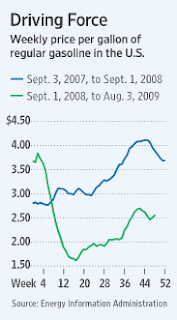
That is good for the consumers but bad for the oil refiners. They will be stuck in the same cycle that occurred last year with gasoline prices and crude oil prices going to a virtual free fall with profits turning into losses. The EIA chart below shows the history of US gasoline prices for the last two years. We started last year out at about $3 then increased to $4.15 per gallon by August. This year we began at $1.55 and went to $2.70 in that same time span.
The Organization of Petroleum Exporting Countries (OPEC) is scheduled to have its next meeting on September 9th with crude oil prices currently hovering around $70 a barrel. That price was quoted as “not bad” and necessary to maintain investment according to OPEC President Botelho de Vasconcelos in Angola over the weekend. OPEC is responsible for 40 percent of global supplies of crude oil and will be reviewing production targets for member countries at their next meeting.
Their big bug-a-boo will be how to handle the massive cheating by some of their members who are exceeding their assigned quotas. July estimates leave the OPEC-11 about one million barrels in excess of the total assigned quota of 25 million barrels of output per day in order to be in compliance with the about 4 million barrels per day crude output agreed upon last year.
August 10, 2009 12.30 PM MDT
Gas prices are up 14 cents per gallon in the last 10 days across the country but crude oil has remained steady around $70 a barrel since the beginning of July. The American Petroleum Institute’s spokesman John Felmy would like you to reason that when the price of crude oil fluctuates up or down, it will have the same affect on the pump price for gasoline. However, that has not been the case so far in 2009.
The benchmark price for WTI crude oil decreased $1.00 on Friday, August 7th, to $70.93 a barrel after reaching an intra day high of $72.84 a barrel. There was no like response downward in the price for gasoline at U.S. and Canadian gas stations. In fact, gasoline prices have been going steadily upward and crude oil has followed instead of the other way around.
While U.S. gasoline demand usually reaches its ultimate level from June through August, refiners have on the other hand cut production in the three weeks ending July 31. Gasoline stockpiles on that date were 2.9 percent higher than a year earlier, while diesel stocks were 24 percent higher.
The US Energy Information Agency (EIA) reported that total daily fuel use averaged 18.9 million barrels in the four weeks ended July 31, which was 3.1 percent less than a year earlier. However, that is a deceptive number since it includes diesel and jet fuel demand, which has been as much as 20% below last year’s level.
Summer gasoline use is actually on the upswing and will reach its peak demand by Labor Day. This year the holiday weekend falls on September 7th well into the month in which refiners will be switching from producing summer to winter gasoline grade gasoline. That alone has in immediate affect on supply and brings about additional 10 percent of gasoline into the market. Refiners can produce an average of 22 gallons during the winter from a 42 gallon barrel of crude oil versus just 20 gallons out of that same barrel during the summer.
That is good for the consumers but bad for the oil refiners. They will be stuck in the same cycle that occurred last year with gasoline prices and crude oil prices going to a virtual free fall with profits turning into losses. The EIA chart below shows the history of US gasoline prices for the last two years. We started last year out at about $3 then increased to $4.15 per gallon by August. This year we began at $1.55 and went to $2.70 in that same time span.

The Organization of Petroleum Exporting Countries (OPEC) is scheduled to have its next meeting on September 9th with crude oil prices currently hovering around $70 a barrel. That price was quoted as “not bad” and necessary to maintain investment according to OPEC President Botelho de Vasconcelos in Angola over the weekend. OPEC is responsible for 40 percent of global supplies of crude oil and will be reviewing production targets for member countries at their next meeting.
Their big bug-a-boo will be how to handle the massive cheating by some of their members who are exceeding their assigned quotas. July estimates leave the OPEC-11 about one million barrels in excess of the total assigned quota of 25 million barrels of output per day in order to be in compliance with the about 4 million barrels per day crude output agreed upon last year.
You can join the crowd if you are totally confused by all the facts and figures you are reading and hearing on exactly what drives gasoline prices. Yesterday morning I joined a couple of elderly ladies for a cup of coffee at a snack bar table during the Ranch Rodeo being held at the Prairie County Fairgrounds in my hometown of Terry, Montana.
Inevitably, the subject of gasoline prices came up and they wanted to know how they ended up paying almost $1.25 per gallon more at the Four Corners gas station in town since earlier this year. After trying to explain it to them they just rolled their eyes and one of them said that it was just the greedy oil companies making money.
Saturday, July 4, 2009
What can be done about diesel fuel prices?
Dateline: Terry, Montana, U.S.
July 4, 2009
The big holiday and vacation season is once again upon us. Canada and the U.S. just celebrated their respective national birthdays and all eyes in our industry are being kept on whether consumer confidence has re-instilled itself.
Diesel fuel is one of the most critical commodities in keeping the Canadian and U.S. economies rolling. In our transportation and construction industries almost all aspects of operations are fueled by diesel engines. Rising diesel fuel prices can translate to increasing costs of products and services. In order to know what can be done to slow down this increase, you as a consumer need to be aware of its causes and find creative ways to save money on your fuel usage.
There are several basic elements that determine the worth of a gallon of diesel. About fifty-five percent of the cost of diesel reflects the price of crude oil, which is raw material for diesel production. Crude oil is brought from the oil fields to the refineries where the ultra-low sulfur diesel, among other petroleum products, is extracted.
Given a barrel of crude is 42 gallons; the average refinery is able to produce about 8 gallons of diesel and jet fuel or 20 % of the total. About half of the barrel is made into gasoline with the remainder in low end bunker fuel oils and other petroleum products. Refining accounts for nearly fifteen percent of diesel fuel cost.
The remaining elements of the cost of diesel fuel are government taxes and the expense of advertising and delivery. A ten percent excise tax is levied onto all fuel products that are refined in Canada. Although foreign fuel can avoid this tax, it is generally cheaper to buy locally refined fuel as import taxes generally are passed along to the consumer. Marketing and distribution make up about five percent of total diesel fuel cost, but this can often be the most volatile factor affecting the value of diesel fuel.
This is where the diesel fuel consumers may have a sure fire way to save money on their cost for operating their diesel trucks and equipment. They can make arrangements with an on-site fueling company like 4Refuel headquartered in Langley BC, Canada. They currently service most of the Canadian market and recently expanded into the U.S. West Coast market by opening an office in Lynnwood, Washington serving the Greater Seattle area.
Saving fuel and lowering consumption is not only good for the environment; it decreases demand, and ultimately your cost. The factors that affect diesel fuel prices seem complex, but an understanding of the basic principles can empower the individual consumer to make the right decisions.
Bob van der Valk resides in Terry, Montana and is the Fuel-pricing Analyst with 4Refuel LLC in Lynnwood, Washington. He can be contacted at (971) 678-2975 or e-mail him at: bvan@4refuel.com
July 4, 2009
The big holiday and vacation season is once again upon us. Canada and the U.S. just celebrated their respective national birthdays and all eyes in our industry are being kept on whether consumer confidence has re-instilled itself.
Diesel fuel is one of the most critical commodities in keeping the Canadian and U.S. economies rolling. In our transportation and construction industries almost all aspects of operations are fueled by diesel engines. Rising diesel fuel prices can translate to increasing costs of products and services. In order to know what can be done to slow down this increase, you as a consumer need to be aware of its causes and find creative ways to save money on your fuel usage.
There are several basic elements that determine the worth of a gallon of diesel. About fifty-five percent of the cost of diesel reflects the price of crude oil, which is raw material for diesel production. Crude oil is brought from the oil fields to the refineries where the ultra-low sulfur diesel, among other petroleum products, is extracted.
Given a barrel of crude is 42 gallons; the average refinery is able to produce about 8 gallons of diesel and jet fuel or 20 % of the total. About half of the barrel is made into gasoline with the remainder in low end bunker fuel oils and other petroleum products. Refining accounts for nearly fifteen percent of diesel fuel cost.
The remaining elements of the cost of diesel fuel are government taxes and the expense of advertising and delivery. A ten percent excise tax is levied onto all fuel products that are refined in Canada. Although foreign fuel can avoid this tax, it is generally cheaper to buy locally refined fuel as import taxes generally are passed along to the consumer. Marketing and distribution make up about five percent of total diesel fuel cost, but this can often be the most volatile factor affecting the value of diesel fuel.
This is where the diesel fuel consumers may have a sure fire way to save money on their cost for operating their diesel trucks and equipment. They can make arrangements with an on-site fueling company like 4Refuel headquartered in Langley BC, Canada. They currently service most of the Canadian market and recently expanded into the U.S. West Coast market by opening an office in Lynnwood, Washington serving the Greater Seattle area.
Saving fuel and lowering consumption is not only good for the environment; it decreases demand, and ultimately your cost. The factors that affect diesel fuel prices seem complex, but an understanding of the basic principles can empower the individual consumer to make the right decisions.
Bob van der Valk resides in Terry, Montana and is the Fuel-pricing Analyst with 4Refuel LLC in Lynnwood, Washington. He can be contacted at (971) 678-2975 or e-mail him at: bvan@4refuel.com
Wednesday, July 1, 2009
Good news: Prices are up for crude oil but down for gasoline
Dateline: Terry, Montana
July 1, 2009
The price of crude oil has been hovering around $70 a barrel for the last week meanwhile gasoline pump prices in the U.S. and Canada are down by about a nickel a gallon or 1 cent per litre during that same time. The average price for a gallon of gasoline is $2.63 today per the AAA fuelguage report. Montana’s gasoline prices are averaging $2.71 barely nudging down from a week ago price.
If there seems to be no correlation between the two, it is because U.S. and Canadian refineries are just now running crude oil they purchased earlier this year. The typical shelf time in shipping from the well to the refinery is about six weeks and crude oil in the tank at the refineries is still at around $40 a barrel. So who do we blame? The greedy oil companies, those evil Wall Street speculators or is it just plain simple Gasoline Marketing 101?
Crude oil accounts for 55 percent of the cost of gasoline. The other big chunk is the federal, state and local taxes, which make up 24 percent of the cost. Then we add refining costs and profits of 15 percent to the cost of gasoline. Distribution and marketing costs made up the final 6 percent of the cost.
The Petroleum Marketers Association reports the profit margin at each local gas station of between 3 and 15 cents per gallon of gasoline.
This morning we wait for the release of the weekly Department of Energy's inventory statistics, which will give some direction to the market. Other factors may be at work as well with a myriad of glitches at U.S. refineries spooking the traders into shoring up their deals before the July 4th weekend. With just three trading days left in the week no one would knowingly get caught at the end of a short stick in keeping physical product flowing into their tanks.
Armed conflicts and threats around the world are receiving the usual buzz by the paper traders and one that is having an immediate affect is in Nigeria. That has resulted in almost 1 million barrels per day of crude oil being cut off from being shipped to the U.S.
The Shell Oil platform and shipping terminal in the Niger Delta was blown up by militants last weekend interrupting vitally needed crude oil from being loaded. The Nigerian government has desperately been trying to deal with the situation and has even offered amnesty to the dissidents if they lay down their arms.
Speculators are hard at work trying to make money by betting on any outcome. But the adage that “For every winner, there is a loser” applies to the investment business just like it does in sports.
Bob van der Valk resides in Terry, Montana and is the fuel-pricing analyst with 4Refuel Inc. in Lynnwood, Washington. He can be contacted at (971) 678-2975 or e-mail to: tridemoil@aol.com
His viewpoints and previous articles about the petroleum industry can be found at web site address: http://www.4vqp.com/ourconsultants/thegasguy.html
Any views expressed in this newsletter are those of the writer, except where the writer specifically states them to be the views of the 4Refuel group of companies.
July 1, 2009
The price of crude oil has been hovering around $70 a barrel for the last week meanwhile gasoline pump prices in the U.S. and Canada are down by about a nickel a gallon or 1 cent per litre during that same time. The average price for a gallon of gasoline is $2.63 today per the AAA fuelguage report. Montana’s gasoline prices are averaging $2.71 barely nudging down from a week ago price.
If there seems to be no correlation between the two, it is because U.S. and Canadian refineries are just now running crude oil they purchased earlier this year. The typical shelf time in shipping from the well to the refinery is about six weeks and crude oil in the tank at the refineries is still at around $40 a barrel. So who do we blame? The greedy oil companies, those evil Wall Street speculators or is it just plain simple Gasoline Marketing 101?
Crude oil accounts for 55 percent of the cost of gasoline. The other big chunk is the federal, state and local taxes, which make up 24 percent of the cost. Then we add refining costs and profits of 15 percent to the cost of gasoline. Distribution and marketing costs made up the final 6 percent of the cost.
The Petroleum Marketers Association reports the profit margin at each local gas station of between 3 and 15 cents per gallon of gasoline.
This morning we wait for the release of the weekly Department of Energy's inventory statistics, which will give some direction to the market. Other factors may be at work as well with a myriad of glitches at U.S. refineries spooking the traders into shoring up their deals before the July 4th weekend. With just three trading days left in the week no one would knowingly get caught at the end of a short stick in keeping physical product flowing into their tanks.
Armed conflicts and threats around the world are receiving the usual buzz by the paper traders and one that is having an immediate affect is in Nigeria. That has resulted in almost 1 million barrels per day of crude oil being cut off from being shipped to the U.S.
The Shell Oil platform and shipping terminal in the Niger Delta was blown up by militants last weekend interrupting vitally needed crude oil from being loaded. The Nigerian government has desperately been trying to deal with the situation and has even offered amnesty to the dissidents if they lay down their arms.
Speculators are hard at work trying to make money by betting on any outcome. But the adage that “For every winner, there is a loser” applies to the investment business just like it does in sports.
Bob van der Valk resides in Terry, Montana and is the fuel-pricing analyst with 4Refuel Inc. in Lynnwood, Washington. He can be contacted at (971) 678-2975 or e-mail to: tridemoil@aol.com
His viewpoints and previous articles about the petroleum industry can be found at web site address: http://www.4vqp.com/ourconsultants/thegasguy.html
Any views expressed in this newsletter are those of the writer, except where the writer specifically states them to be the views of the 4Refuel group of companies.
Tuesday, June 23, 2009
Dateline: Terry, Montana
June 23, 2009 2:30 PM MDT
By: Bob van der Valk
April showers may bring May flowers but this year it also brought forth a spring time renewal for oil refiner’s profits. This was in the form of increased demand for gasoline after dismal first quarter results in 2009. But now the June swoon has come too soon and the oil companies are looking forward to those summer breezes peeking just around the corner
I was waxing somewhat poetic while reading a flood of news reports this week about gasoline prices in the U.S. and Canada dropping for the first time in over seven weeks. The average price for gasoline in both countries has dropped a whopping seven tenth of a cent of a gallon or liter this week. Motorists have been practically been dancing in the streets celebrating their new found fortune according to on the spot media reports from many parts of the country. Some are even quoting some experts about gasoline prices having peaked and to be going down for the remainder of this year.
But wait just a minute! How come the price of crude oil dropped $5 to around $69 a barrel in the last two weeks but gas prices have only gone down by a fraction of a cent during that same time? Haven’t we been told by some of the pundits that gas prices always move in lock step with crude oil prices? That for every dollar a barrel change in the price of crude oil we are supposed to see gasoline move up or down 2.5 cents per gallon at the pump?
The answer my friend is blowing in the wind. This time around the major oil companies are not matching the independent unbranded gasoline rack prices down as fast as you were expecting. The difference between the major branded dealer tank wagon and independent unbranded gasoline prices is now over 20 cents per gallon in the U.S. and 5 cents per liter in Canada. This phenomenon is known in our industry as: “Gas prices shoot up like a rocket, and drift down like a feather”.
In this case the oil companies are stocking up to be prepared in case those summer breezes change into hurricanes. Gasoline demand has increased with April being the latest month on record showing an increase over the same month last year. So with Canada Day on July 1st and the U.S. July 4th weekend just around the corner do not expect to see pump prices coming down a lot this week.
Different average gas prices have been bandied about by various agencies of the government and private companies with the motoring public somewhat confused about which number to believe. For instance on June 22nd the Energy Information Agency (EIA) showed the average price for a gallon of regular gasoline in the U.S. to be at $2.691 while the AAA fuelgauge reported it at $2.69. Those two seem to be in sync but on the other hand the gasbuddy.com web site reported the average U.S. price at $2.663 per gallon.
The difference in the two reports is that the EIA and AAA uses information provided through credit card purchases. The gasbuddy.com web site has price spotters, who log in and report pump prices from their local gas stations for both cash and credit cards.
For instance Arco stations do not accept anything other than cash or debit cards at their pumps and are usually the lowest price in their neighborhood. That tends to skew the average price per gallon by about 3 cents per gallon. This is due to dealers, who do accept all types of credit cards, having to price their gasoline higher by having to pay a merchant fee for each transaction to their banks.
In the short term prices will continue to go up another 25 cents per gallon between now and middle of August. After Labor Day gasoline prices will ebb down slowly and by Thanksgiving go back down to about where they were last year at the same time. That means you can start looking forward to $2 per gallon gasoline at a gas station near you by Christmas this year.
Now you know what is going to be happening in the refining and marketing end of the oil industry, you should go fill up your tank by this weekend before gas prices are raised. In the Badlands of Eastern Montana we believe in the moral behind the fable of the “Milkmaid and Her Pail”, which goes: “Do not count your chickens before they are hatched!”
Bob van der Valk resides in Terry, Montana and is the Director of US Branded Licensing with 4Refuel Inc. in Lynnwood, Washington. He can be contacted at (971) 678-2975 or by email at: tridemoil@aol.com
Bob’s web site address is: www.4vqp.com/ourconsultants/thegasguy.html
Any views expressed in this newsletter are those of the writer, except where the writer specifically states them to be the views of the 4Refuel group of companies.
June 23, 2009 2:30 PM MDT
By: Bob van der Valk
April showers may bring May flowers but this year it also brought forth a spring time renewal for oil refiner’s profits. This was in the form of increased demand for gasoline after dismal first quarter results in 2009. But now the June swoon has come too soon and the oil companies are looking forward to those summer breezes peeking just around the corner
I was waxing somewhat poetic while reading a flood of news reports this week about gasoline prices in the U.S. and Canada dropping for the first time in over seven weeks. The average price for gasoline in both countries has dropped a whopping seven tenth of a cent of a gallon or liter this week. Motorists have been practically been dancing in the streets celebrating their new found fortune according to on the spot media reports from many parts of the country. Some are even quoting some experts about gasoline prices having peaked and to be going down for the remainder of this year.
But wait just a minute! How come the price of crude oil dropped $5 to around $69 a barrel in the last two weeks but gas prices have only gone down by a fraction of a cent during that same time? Haven’t we been told by some of the pundits that gas prices always move in lock step with crude oil prices? That for every dollar a barrel change in the price of crude oil we are supposed to see gasoline move up or down 2.5 cents per gallon at the pump?
The answer my friend is blowing in the wind. This time around the major oil companies are not matching the independent unbranded gasoline rack prices down as fast as you were expecting. The difference between the major branded dealer tank wagon and independent unbranded gasoline prices is now over 20 cents per gallon in the U.S. and 5 cents per liter in Canada. This phenomenon is known in our industry as: “Gas prices shoot up like a rocket, and drift down like a feather”.
In this case the oil companies are stocking up to be prepared in case those summer breezes change into hurricanes. Gasoline demand has increased with April being the latest month on record showing an increase over the same month last year. So with Canada Day on July 1st and the U.S. July 4th weekend just around the corner do not expect to see pump prices coming down a lot this week.
Different average gas prices have been bandied about by various agencies of the government and private companies with the motoring public somewhat confused about which number to believe. For instance on June 22nd the Energy Information Agency (EIA) showed the average price for a gallon of regular gasoline in the U.S. to be at $2.691 while the AAA fuelgauge reported it at $2.69. Those two seem to be in sync but on the other hand the gasbuddy.com web site reported the average U.S. price at $2.663 per gallon.
The difference in the two reports is that the EIA and AAA uses information provided through credit card purchases. The gasbuddy.com web site has price spotters, who log in and report pump prices from their local gas stations for both cash and credit cards.
For instance Arco stations do not accept anything other than cash or debit cards at their pumps and are usually the lowest price in their neighborhood. That tends to skew the average price per gallon by about 3 cents per gallon. This is due to dealers, who do accept all types of credit cards, having to price their gasoline higher by having to pay a merchant fee for each transaction to their banks.
In the short term prices will continue to go up another 25 cents per gallon between now and middle of August. After Labor Day gasoline prices will ebb down slowly and by Thanksgiving go back down to about where they were last year at the same time. That means you can start looking forward to $2 per gallon gasoline at a gas station near you by Christmas this year.
Now you know what is going to be happening in the refining and marketing end of the oil industry, you should go fill up your tank by this weekend before gas prices are raised. In the Badlands of Eastern Montana we believe in the moral behind the fable of the “Milkmaid and Her Pail”, which goes: “Do not count your chickens before they are hatched!”
Bob van der Valk resides in Terry, Montana and is the Director of US Branded Licensing with 4Refuel Inc. in Lynnwood, Washington. He can be contacted at (971) 678-2975 or by email at: tridemoil@aol.com
Bob’s web site address is: www.4vqp.com/ourconsultants/thegasguy.html
Any views expressed in this newsletter are those of the writer, except where the writer specifically states them to be the views of the 4Refuel group of companies.
Subscribe to:
Posts (Atom)